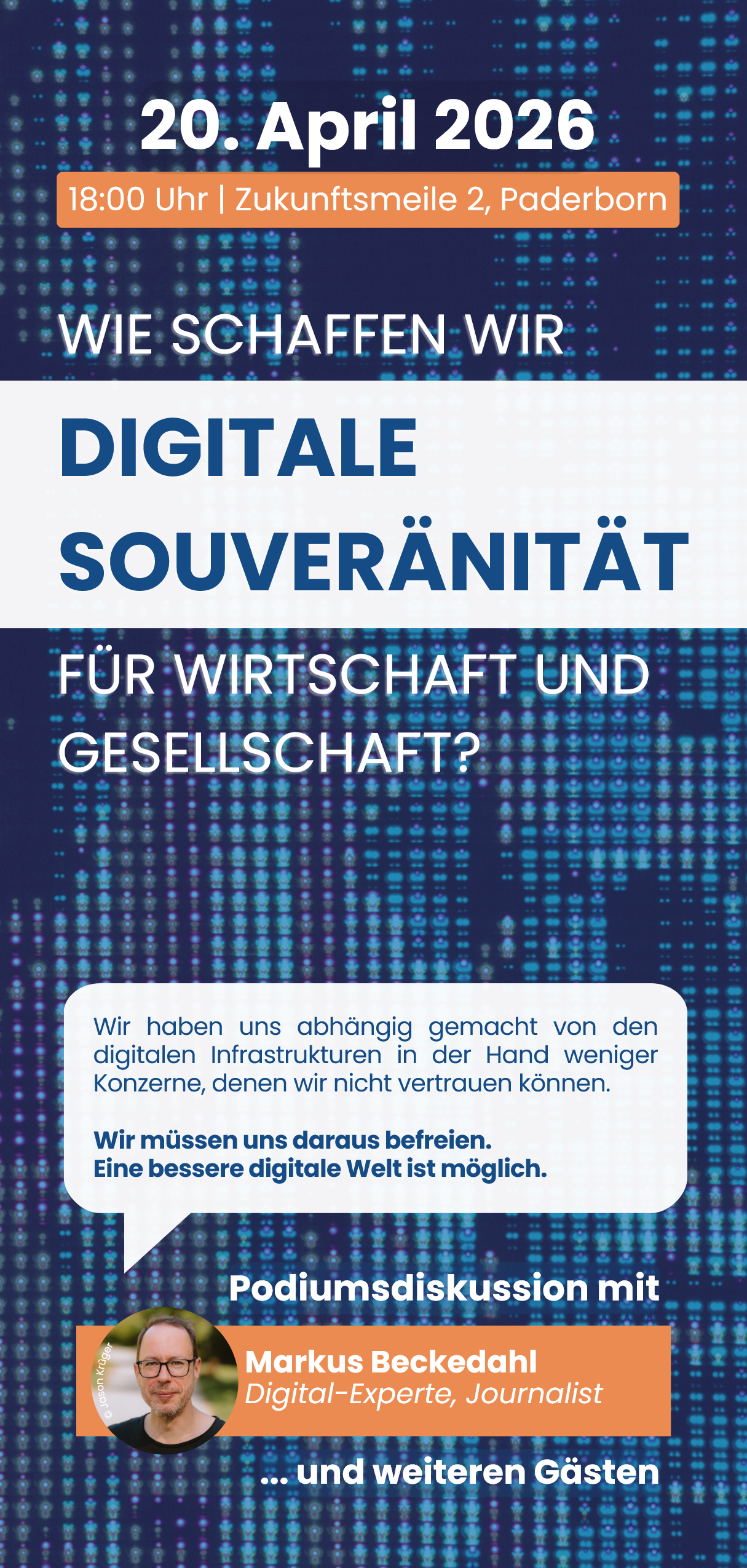
20 April, 6 p.m., panel discussion on "Digital sovereignty for business and society in the Zukunftsmeile 2.
The non-profit organisation cum ratione and the Software Innovation Lab of Paderborn University at the SICP - Software Innovation Campus Paderborn invite you to a panel discussion on digital sovereignty for business and society with the well-known journalist and IT expert Markus Beckedahl and representatives from politics, the media and regional business.
The event is the second part of the "Digital sovereignty - democratic answers for a free Internet" series of events, the first part of which saw digital expert and media scientist Dr Martin Andree speak to an audience of 200 in Paderborn in February. Further dates include a digital follow-up to the panel discussion on 19 May and a workshop on digital literacy for private individuals on 23 June in Präsenz.
The event will take place on 20 April at 6 p.m. at the research and innovation campus in the Zukunftsmeile (research and development cluster located in the city of Paderborn). Participation in the event is free of charge, but registration is required.The registration linkis available via the cum ratione website atwww.cum-ratione.organd via thepages of the Software Innovation Campus Paderborncan be reached.
"We have become dependent on digital infrastructures in the hands of a few corporations that we cannot trust. We need to free ourselves from this. A better digital world is possible," argues Markus Beckedahl. Together with guests from politics, the media and the regional economy, cum ratione and the SICP therefore want to explore the question of how Germany and Europe can become more digitally sovereign and how domestic companies can make sovereign decisions about their data and IT systems in future and thus avoid risks. The management teams of cum ratione and Software Innovation Lab agree: "Big tech social media groups pose particular challenges to traditional, independent media in several respects, in that they change the consumption and perception of news and thus influence journalism and the formation of political opinion. At the same time, they enjoy legal privileges and put traditional media under enormous economic pressure by shifting advertising revenue."
We look forward to your participation!